
 EN
EN Español
 العربية
 Tiếng Việt
Semiconductor Substrate Material
A semiconductor substrate material is the foundational base on which electronic devices are built. It provides the physical support and often participates in the electrical, thermal, and mechanical performance of the finished component. In modern electronics, the choice of substrate material is critical because it directly affects device efficiency, reliability, heat dissipation, and manufacturing cost. Different applications require different substrate properties, so engineers select materials based on electrical insulation, thermal conductivity, surface smoothness, strength, and compatibility with fabrication processes.Silicon is the most widely used semiconductor substrate material because it offers an excellent balance of performance, availability, and cost. It has suitable mechanical stability, mature processing technology, and well-understood electrical characteristics. Silicon substrates are widely used in integrated circuits, power devices, sensors, and many other electronic products. Their compatibility with large-scale wafer production also makes them ideal for mass manufacturing.In addition to silicon, other substrate materials are used when higher performance is needed. Silicon carbide is valued for its high thermal conductivity, wide bandgap, and ability to operate under high voltage, high temperature, and high-frequency conditions. These features make it suitable for power electronics and demanding industrial applications. Gallium nitride is another important material, especially for high-speed and high-efficiency devices. It is often used where fast switching and strong power handling are required.Sapphire, glass, quartz, and ceramic materials can also serve as semiconductor substrates depending on the application. Sapphire offers good insulating properties and optical transparency, making it useful in specific optoelectronic devices. Glass substrates are often chosen for low-cost or display-related applications. Ceramic substrates provide strong thermal resistance and mechanical durability, which are useful in harsh environments.The quality of a semiconductor substrate is measured by factors such as crystal structure, defect density, wafer flatness, purity, and thermal behavior. A high-quality substrate helps reduce energy loss, improve yield, and extend device lifetime. As electronic systems continue to become smaller, faster, and more powerful, the demand for advanced substrate materials continues to grow.Overall, semiconductor substrate materials are essential to the development of modern electronics. They form the structural and functional foundation for a wide range of devices, and ongoing material innovation is helping enable new generations of high-performance, energy-efficient technologies.
продукт
классификация:
-
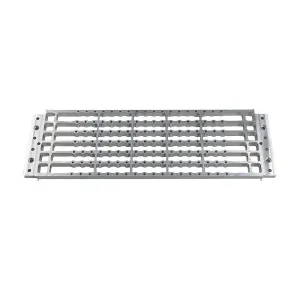
Semiconductor substrate
Их классификация: Semiconductorмнения: 18номер:Время выпуска: 2026-09-21 15:28:38Semiconductor substrate is a critical foundation material used in chip manufacturing and advanced electronic devices. Designed with high precision, excellent stability, and reliable performance, semiconductor substrates support wafer processing, integrated circuits, and electronic applications. High-quality substrate solutions help improve device performance, manufacturing efficiency, and product reliability across modern semiconductor industries.
новости
классификация:
Нет результатов поиска!
случай
классификация:
Нет результатов поиска!
видео
классификация:
Нет результатов поиска!
скачать
классификация:
Нет результатов поиска!
вербовка
классификация:
Нет результатов поиска!
Рекомендуемые продукты
Нет результатов поиска!



 телефон