
 EN
EN Español
 العربية
 Tiếng Việt
Humanoid robot arm motor
A humanoid robot arm motor is a key component that enables a robot arm to move in a human-like way. It provides the force and control needed for lifting, rotating, bending, and positioning the arm with precision. In a humanoid robot, the motor must be compact, efficient, and powerful enough to support smooth motion while keeping the overall structure lightweight. Because the arm usually has multiple joints, each joint may require its own motor or actuator system to achieve independent and flexible movement.The design of a humanoid robot arm motor focuses on balancing torque, speed, accuracy, and energy consumption. High torque is important for tasks such as holding objects, pushing, or assembling parts. At the same time, the motor must respond quickly and maintain stable movement without vibration or unnecessary noise. For humanoid robots, silent operation is often preferred, especially in environments where the robot works near people. This is why engineers pay close attention to the motor’s structure, materials, and control system.Different types of motors can be used in humanoid robot arms, including brushed motors, brushless motors, and servo motors. Among them, brushless motors are often favored because they offer high efficiency, long service life, and low maintenance. Servo systems are also common because they provide accurate position control and are suitable for robotic joints that need precise angle adjustment. In advanced designs, motors may be combined with gear reducers to increase output torque and improve control at low speeds. This makes it possible for the arm to perform delicate actions such as grasping small objects or making fine adjustments.The control system is just as important as the motor itself. A humanoid robot arm motor must work with sensors, controllers, and feedback systems to ensure exact motion. Encoders, torque sensors, and current feedback help monitor position and load in real time. With this information, the robot can correct errors instantly and maintain stable performance. This level of control is essential for applications such as service robots, research platforms, industrial automation, and medical assistance.Durability is another major requirement. A humanoid robot arm motor should withstand repeated motion, continuous operation, and varying loads over time. It must also handle heat dissipation properly to avoid performance loss. Engineers often use advanced cooling methods and strong mechanical designs to improve reliability. In addition, easy integration with the robot’s mechanical frame and electronic system is important for reducing complexity during assembly and maintenance.Overall, a humanoid robot arm motor is the foundation of robotic arm movement. It combines power, precision, responsiveness, and durability to support human-like actions. As robotics technology continues to develop, these motors are becoming smaller, smarter, and more efficient, allowing humanoid robots to perform more natural and useful tasks in everyday life.
продукт
классификация:
-
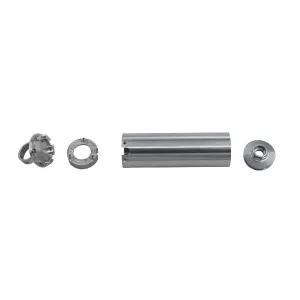
Humanoid robot arm motor
Их классификация: Humanoid robotмнения: 13номер:Время выпуска: 2026-09-21 16:14:11Humanoid robot arm motors are precision drive components designed to provide powerful and accurate movement for robotic arms. They deliver stable torque, fast response, and reliable operation for humanoid robots, industrial automation, research equipment, and intelligent robotic systems. Customized motor solutions are available for different motion requirements and applications.
новости
классификация:
Нет результатов поиска!
случай
классификация:
Нет результатов поиска!
видео
классификация:
Нет результатов поиска!
скачать
классификация:
Нет результатов поиска!
вербовка
классификация:
Нет результатов поиска!
Рекомендуемые продукты
Нет результатов поиска!



 телефон